Pool Removal Tampa, FL
Compare pool demolition options, understand Tampa-area permit and drainage issues, and request an estimate for your property.
Tampa Pool Removal Cost Estimator
Estimate based on pool type, size, access and groundwater conditions
Why Pool Removal in Tampa Requires More Than Demolition
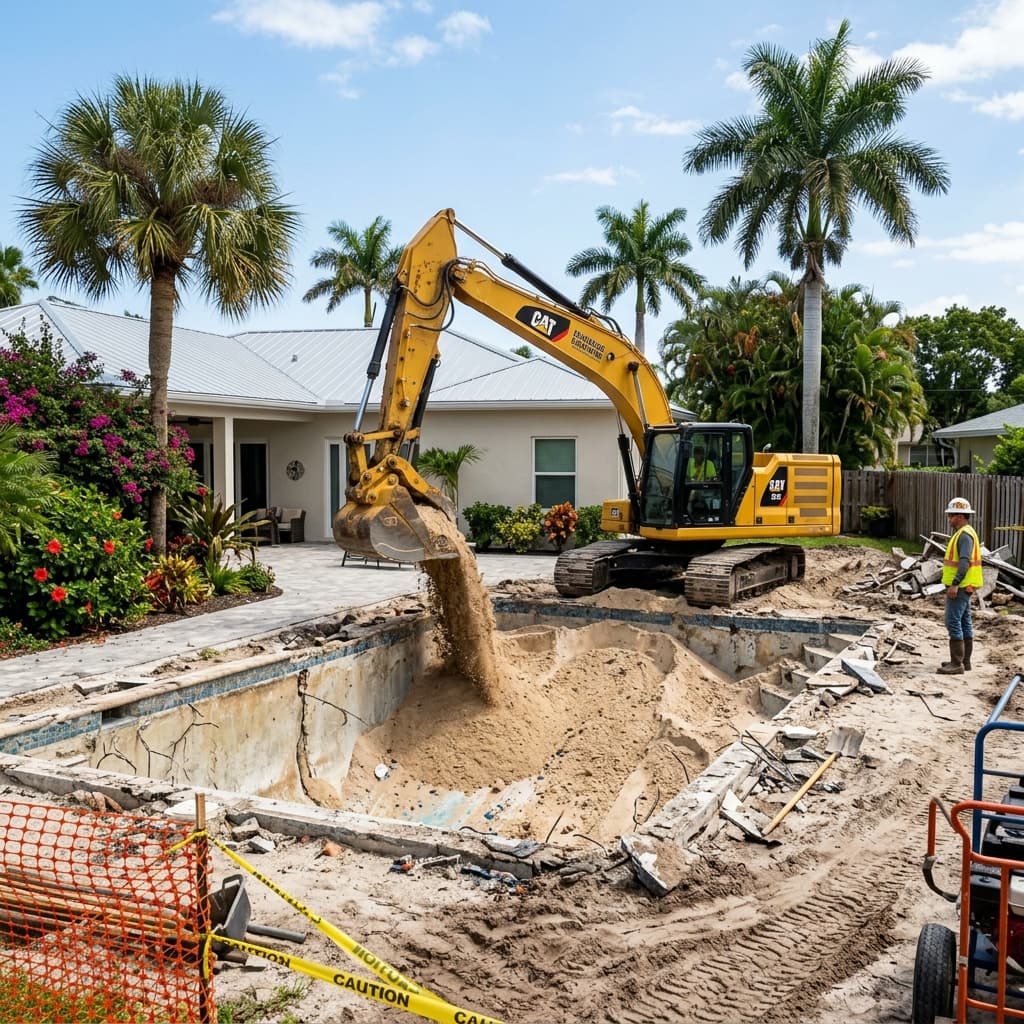
Tampa Bay properties can have high groundwater, tight backyard access, drainage constraints, and jurisdiction-specific permit requirements. Those conditions affect how a pool should be drained, broken up, removed, backfilled, and compacted.
Before hiring a contractor, understand the difference between full and partial pool removal, review the pool demolition process, and check the permit rules that apply to your address.
Groundwater matters
An empty pool shell can be affected by hydrostatic pressure when groundwater is high. Site conditions should be evaluated before demolition so drainage and backfill decisions match the property.
What Drives Pool Removal Cost in Tampa?
Cost is mainly driven by the removal method, pool size and material, equipment access, hauling and disposal, groundwater conditions, fill requirements, and local permit or inspection requirements.
Partial Removal
Usually involves breaking portions of the shell, creating drainage openings where required, and backfilling the remaining cavity. It can cost less, but future construction options may be more limited.
Full Removal
Removes the pool shell and associated material before backfill. This is typically more expensive but may be preferable when future construction or full site restoration is planned.
Tampa Site Conditions
Tight access, groundwater, drainage, demolition debris, and hauling distance can materially change a quote even when two pools are similar in size.
Tampa Pool Removal Resources
Use these guides to understand the technical and local issues before requesting quotes.
High Water Table & Dewatering
Learn why groundwater can affect demolition, drainage, excavation, and compaction across Tampa Bay.
Read the dewatering guideSoil Stabilization & Backfill
Understand why fill material, lift thickness, moisture, and compaction matter after the shell is removed or abandoned.
Read the backfill guideTampa Permit Guide
Review the permit questions homeowners should resolve before starting a pool demolition project in the Tampa area.
Read the permit guidePool Removal Across Tampa Bay
Local conditions vary by neighborhood, county, access, drainage, and soil.
South Tampa
Tight access, older pools, and urban lot constraints.
Brandon
Suburban access, drainage, and backyard restoration.
Riverview
Groundwater and drainage considerations near the Alafia River corridor.
St. Petersburg
Pinellas permitting and coastal groundwater considerations.
Clearwater
Coastal conditions, access, and Pinellas County requirements.
Carrollwood
Established neighborhoods, tree protection, and access planning.
Wesley Chapel
Pasco-area permitting and newer residential development.
Tampa Bay
See the full Tampa Bay service-area guide.
Typical Pool Removal Process
The exact sequence depends on the property, jurisdiction, and removal method.
Site Review & Permits
Confirm access, utilities, pool construction, groundwater concerns, local permit requirements, and the intended use of the reclaimed area.
Drain & Demolish
Drain the pool using an appropriate method, disconnect or cap utilities as required, and perform the selected partial or full demolition.
Backfill & Restore
Place suitable fill, compact it appropriately for the planned future use, complete required inspections, and restore the final grade.
Tampa Pool Removal FAQ
How much does pool removal cost in Tampa?
Cost varies by pool size, material, access, disposal, groundwater conditions, fill needs, and whether the project is a partial or full removal. Use the calculator above for a planning estimate, then confirm with a site-specific quote.
Is a permit required?
Permit requirements depend on the local jurisdiction and scope of work. Confirm current requirements with the applicable building department before demolition begins.
What is the difference between partial and full removal?
Partial removal leaves portions of the pool structure in place after approved demolition and drainage work. Full removal removes the shell and associated material before backfill.
Does high groundwater matter?
Yes. Groundwater can affect excavation, drainage, shell stability, and backfill conditions, so Tampa-area sites should be evaluated before work begins.
Can I build where the pool used to be?
Possibly, but future construction depends on the removal method, soil conditions, compaction, engineering requirements, and local building rules. Tell the contractor your future plans before demolition.
How long does pool removal take?
The work itself can often be completed in several days, but access, weather, inspections, permitting, hauling, and site conditions can extend the overall project timeline.
What happens to pool equipment?
Pumps, filters, heaters, electrical connections, gas lines, and other equipment need to be removed or properly disconnected as part of the project scope.
What should I ask a contractor?
Ask which removal method is proposed, what permits are required, how groundwater and drainage will be handled, what fill will be used, how compaction will be verified, what is included in disposal, and what documentation you receive at completion.
Will removing a pool increase home value?
It depends on the property and buyer. Pool removal can reduce maintenance and reclaim yard space, but there is no universal guaranteed increase in property value.
Planning a Pool Removal in Tampa?
Start with a planning estimate, compare full and partial removal, and request a site-specific quote for your property.